
Content note: pictures of shoes with toes
TLDR: Yes, but you can get 90% of the benefit with shoes that look perfectly normal.
As I’ve mentioned before, I am one of those programmers.
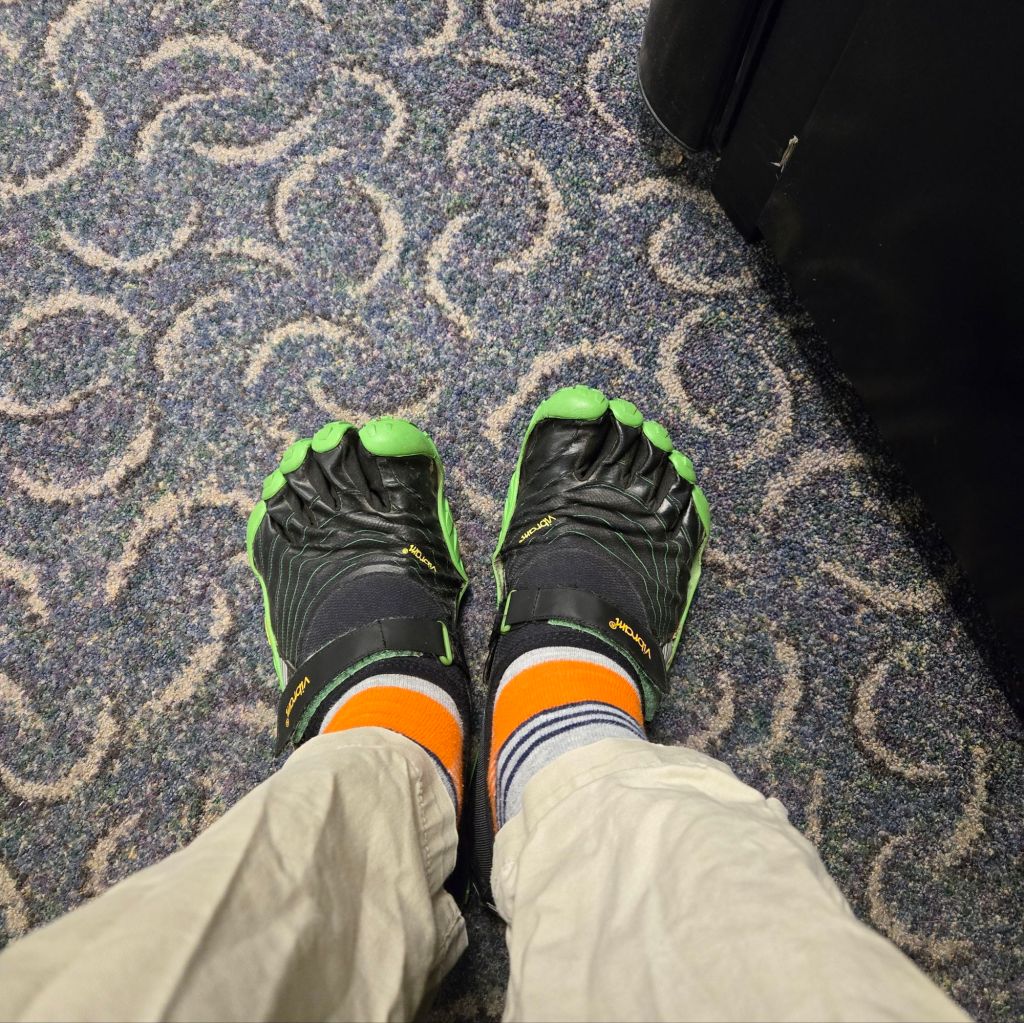
As I also mentioned before, they are, in fact, ridiculously comfortable. But is it worth it to have shoes that look like…well, feet?
I have good news and bad news on that account. The bad news is: yes, it is absolutely worth it. It is so worth it that after getting used to them you will think it’s ordinary shoes that look ridiculous.
The good news is: you don’t have to choose!
The Vibrams in the picture above are my “all-weather” shoes. These are my cold-weather shoes:
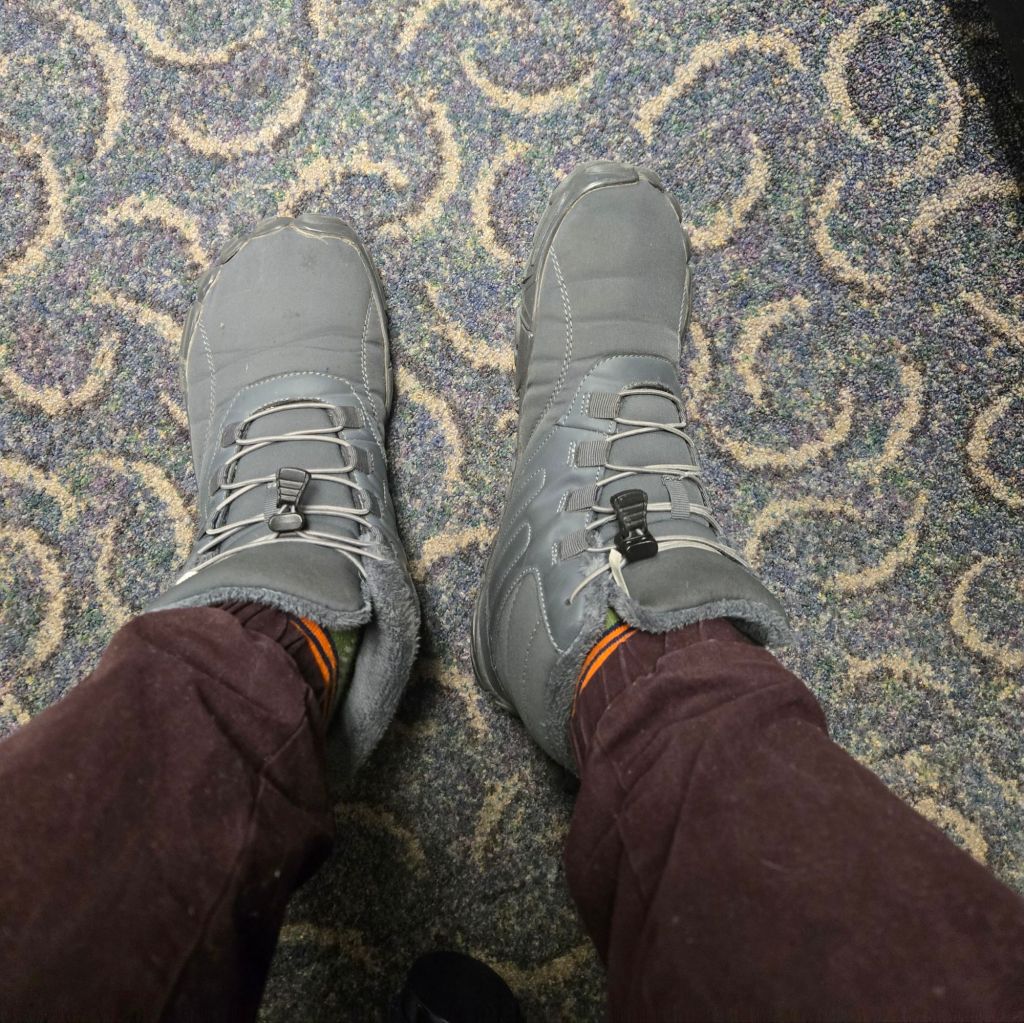
Are they as comfortable as my toe shoes? Honestly, no. Partly that’s because they’re a smidge too small (we buy used, so we can’t always get the right size); but partly, I admit, it’s because they’re more restrictive. The toes do matter.
But are they still comfortable? Yes. They are, in fact, ridiculously comfortable.
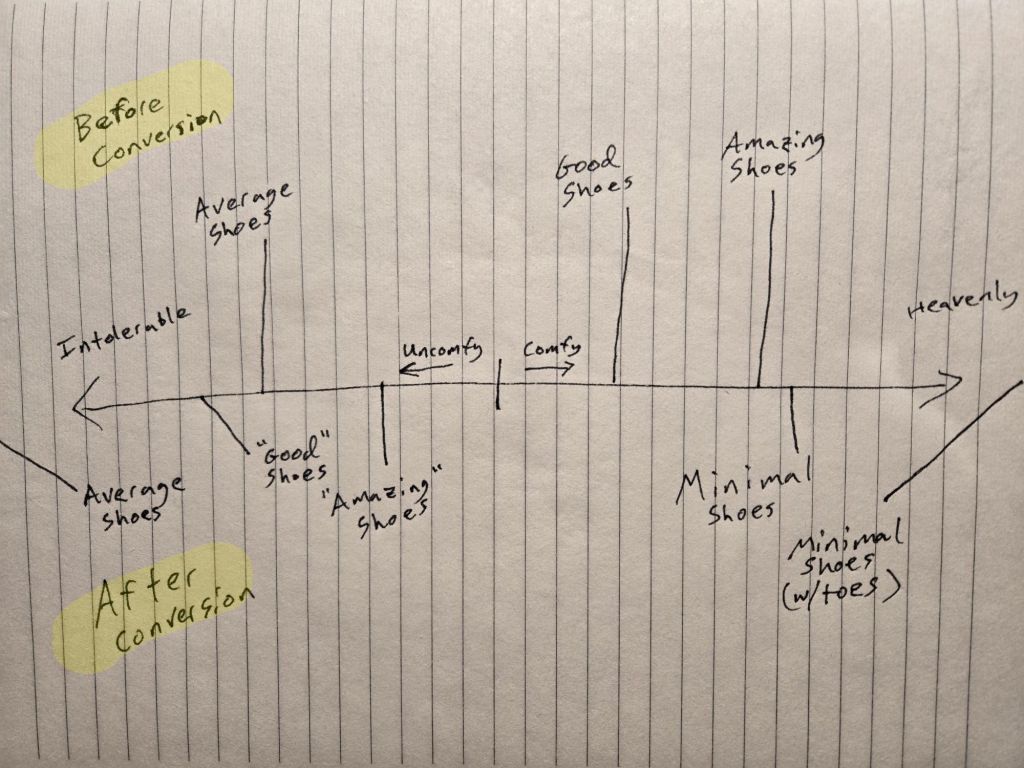
See, the toes aren’t the most important part. They’re not what makes a minimal shoe minimal–or at least, they’re not the main thing.
This is the main thing:
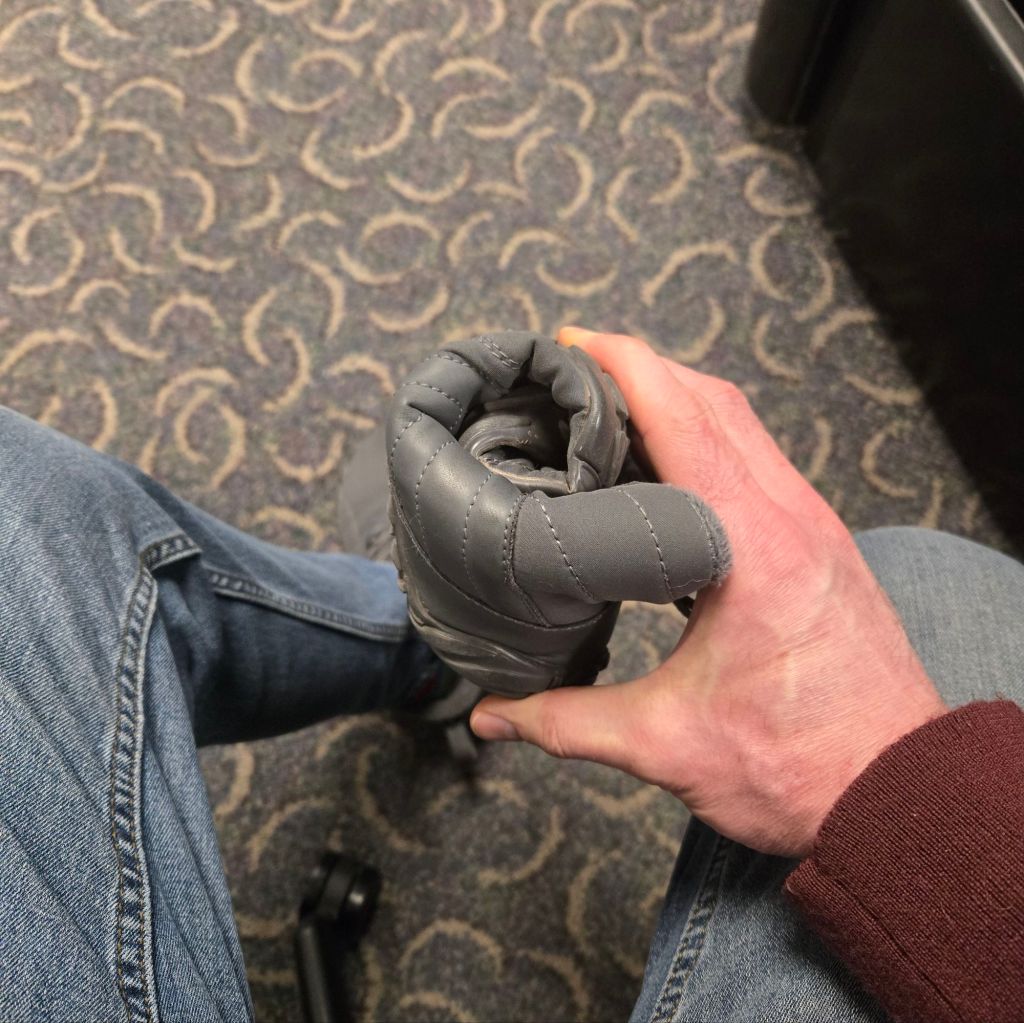
Thin, light, and most of all flexible: that’s what makes a shoe minimal. The idea is that the shoe protects your foot from scrapes, punctures, extreme temperature, and so on–and that’s it. In all other respects, they should be as close as possible to being no shoes at all.
(That’s why minimal shoes are often also called “barefoot shoes.”)
So, are there any other downsides? Well, if you’re like 70% of the strangers I’ve tried to proselytize, you might be thinking something like: “If these shoes are so light and flexible, how will I get proper arch support? That’s important!”
Allow me to ask you a question in turn: if “arch support” is so important, what did our ancestors do for the tens of thousands of years before it was invented?
Now, I’m well aware that the answer to “if X is so important, what did people do before X?” is very often something like “they died a lot” or “they had a real bad time, way too often, pointlessly.” The modern world really is better in many ways!
On the other hand, the modern world isn’t better in every way: there are plenty of other times when the answer really is “they were healthier and/or happier.” I believe that for most people, arch support falls squarely in the latter category.
You see, in this particular case, the answer to “what did people do before arch support” is: “they exercised their feet.“
Your foot, just like your hand, isn’t solid bone: it’s many small bones, tied together with muscles and tendons. This has a lot of implications, but for our purposes the most important one is: your foot can flex.
In fact, it evolved to flex. And not just passively–those muscles they’re tied together with? Well, guess what? When you walk barefoot, you actually use those muscles–and when you encase your feet in thick, rigid shells every day, eventually you’ll be deeply uncomfortable without artificial arch support, because your feet’s natural support will have atrophied!
And it’s not just arches, either: in the past, I’d wear heavy boots with tall, stiff ankles while hiking on the mountains, so my ankle would be protected if I slipped and twisted it. I was usually pretty careful where I stepped, but every now and then I’d still wrench it, and it was nice to know that when I did the damage would be limited. (Mostly. Probably.)
So what happened? Why don’t I worry about ankle support anymore? Well, you could say that when I twist my ankle now, the muscles in my ankle support it and keep it from twisting too far–just like how when you fall on your hands, the muscles in your arms help keep your elbows from smashing into the ground.
But really, it would be more accurate to say that…I just don’t twist my ankle anymore.
Seriously. I used to tweak it…maybe twice a year or so? Infrequently, buy regularly. Now, I literally can’t remember the last time it happened.
I still slip and trip sometimes, of course–but now, when I fall and try to catch myself with an off-kilter ankle, instead of buckling and getting wrenched, it just…catches me.
My feet are even warmer now! I used to have cold feet all the time–and I mean, all the time. I’d routinely wear thick wool socks in the dead of summer and still climb into bed at night with clammy feet.
After switching to minimal shoes, though (and especially after switching to socks with toes), I almost never have that problem. I still have a few pairs of wool socks, but I honestly can’t remember the last time I wore them for warmness (as opposed to wearing them for “all my other socks are dirty”-ness).
In conclusion, “ordinary” shoes are awful, you probably won’t need arch support after wearing minimal shoes for a month or two, and you will likely experience other health benefits in addition to improved comfort–and you won’t even have to be reminded that your legs have appendages at the ends of them to get most of the benefit!

 In Search of Secrets