Last night I was rereading an old essay of mine about capitalism (or rather, what I considered to be capitalism at the time). I may or may not write a post later about my thoughts.
(I’d like to do a “review” of one of my older posts at some point–just to see what I’ve learned, which of my beliefs and opinions have changed, how I’ve grown, and so on–but I don’t know if it will be that post.)
I concluded the post with this:
Unfortunately, there’s nothing to prevent someone from […] trading freely to encourage innovation and growth when it suits them, and stealing the best of the profits when it doesn’t. Honest capitalism is the fairest and most effective kind, but that doesn’t mean that only honest people can be capitalists.
If this were the whole story, the future might look pretty bleak: without an advantage that only the honest could use, the thieves would continue to take what they pleased without regard for others’ welfare, and with the science and resources of capitalist practice lifting the restrictions of old, the world would eventually either be destroyed or subjugated utterly. However, there is some hope on at least two different fronts. I’ll elaborate on these next time in part two.
Well, here we are in the future, and gosh, it seems pretty darned bleak! And it does seem like the people (and systems) controlling the economy are going to either destroy the world or enslave its population. I never did write part two, but I’d really like to now–the current timeline makes me want to share those hopes more than ever.
If you don’t know, déjà vu is the feeling of “remembering” an event that just happened for the first time, sort of like it’s a scene from a movie you’ve seen before. (If you already knew that, enjoy the irony of hearing it explained again!)
I’ve heard about many people experiencing déjà vu at some point in their lives, and I’ve experienced it multiple times myself, but there’s a detail I haven’t heard others talk about. For those of you who’ve had it, I’m curious: is your feeling of déjà vu itself in the imagined memory? That is, when feeling “I remember this happening before,” do you also think “and I remember remembering that this has happened before?” Is your déjà vu a recursive feeling of “this has happened many times before,” or does the feeling stop at “this has happened once before?”
Because for me, it is absolutely recursive. Every time.
Keeping a daily gratitude journal is one of the cheapest, easiest, and most well-documented ways of improving your overall happiness and mental well-being. (Like most people who know this fact, I don’t keep a daily gratitude journal.)
I don’t keep a daily gratitude journal, but when I was young my family did keep a yearly gratitude journal: every Thanksgiving, we’d take some time together to volunteer things we were grateful for and write them down. Sometimes they were things specific to the past year, sometimes they were more perennial. Sometimes they were serious, conventional things–friends, family, health, and so on–other times they were small, lighthearted, or even silly. (I recall one year saying I was thankful for “God making the Big Bang that created the universe that created the Milky Way that created Earth that created humans so they could invent the Super Nintendo so I could play videogames.” I think I was about nine?) As holiday traditions go it was pretty subdued, but it was still one of my favorites. Even just reading through what we’d written in past years never failed to put a smile on my face.
I don’t keep a daily gratitude journal, but I do have a blog! So this year, I’ve decided to revise an old tradition and share with you some of the things I’m thankful for–large and small, silly and serious. In no particular order:
My close family–those I’ve chosen through friendship and marriage, as well as those I’ve been gifted by chance.
In particular, my father. I’m writing a song for you, dad. I can’t wait for it to be finished so you can hear it.
Having a stable job I don’t hate with a good boss who doesn’t hate me.
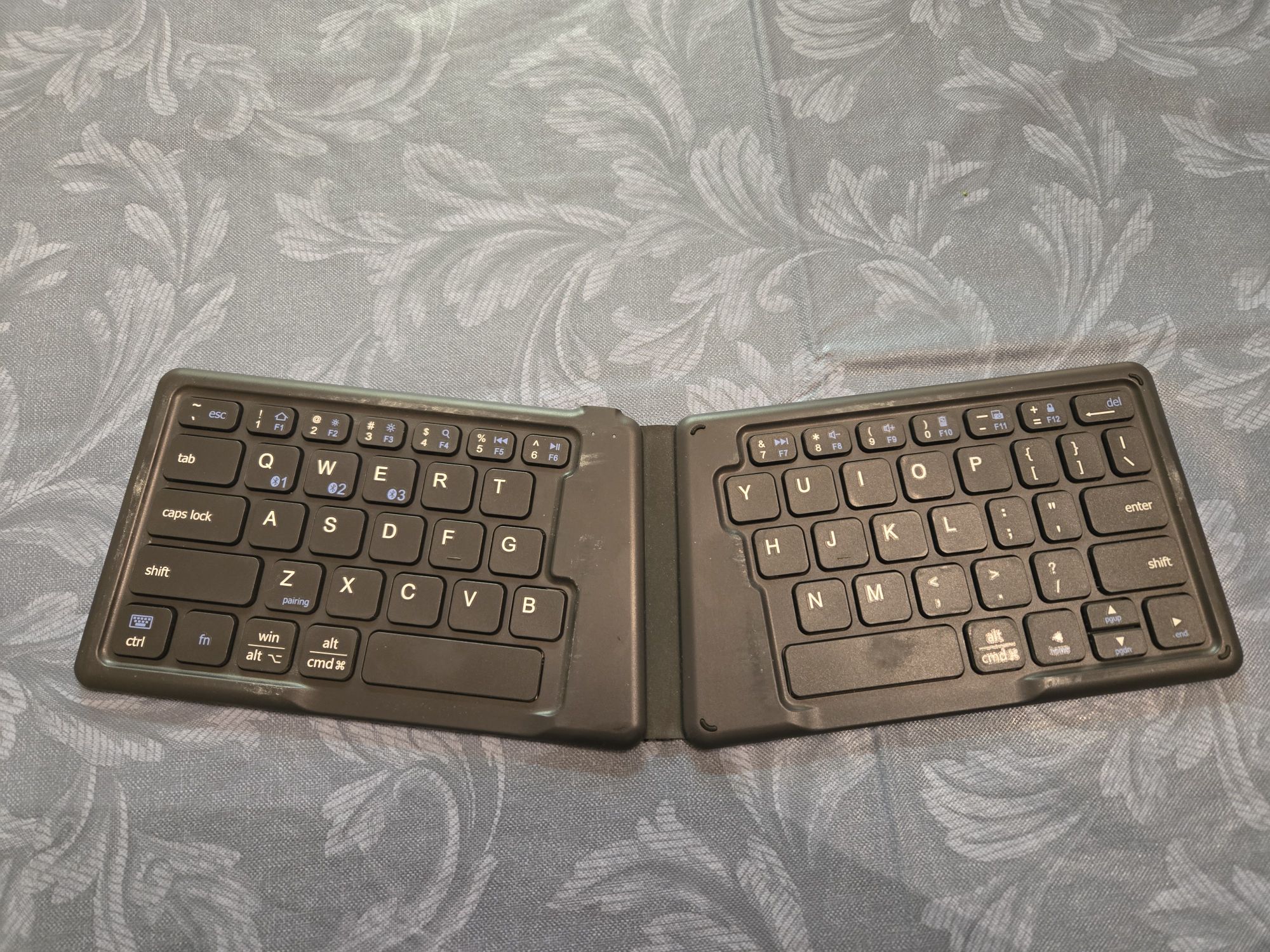
The three best gifts I’ve ever bought for myself: my ErgoDox EZ bespoke mechanical keyboard, my Kensington Expert trackball mouse, and my turquoise Nintendo Switch Lite. (Yes, I’m still in love with videogames.)
Discovering that Stephanie Myer wrote and published a gender-swapped version of Twilight to prove a point, reading it, and finding it works at least as well as the original. #TeamEdythe
Making an effort to get back in touch with some friends I’ve been missing.
Seeing my writing improve enough to produce something I’m truly proud of (and which didn’t take me years or decades to finish).
And of course, I’m thankful for you, my wonderful readers. It’s hard to overstate how rewarding it’s been having an audience, even a small one. Knowing that someone other than my mom is actually reading and enjoying my writing (love you, mom) has been not only motivational, but also wonderful soul food. As always, I love you, and I hope your week finishes with a special treat and some unexpected good news. Joy and Health to you all!
You may well ask, “What makes porn good?” or even “How can porn ever be good?” And I may well answer, “I think I have an idea for a future post…” ↩︎
Tomorrow I’ll be posting…I guess you could call it the finale of my “Angst Saga.” (I don’t think I’ll be calling it that, but you certainly could.)
A poem about heartbreak might seem like an odd choice for Thanksgiving, but I truly am grateful for the experience. I’m not one of those people who thinks pain is intrinsically valuable–it’s not–but there are some valuable experiences that wouldn’t be the same without it. For example: moments when you’ve taken a big risk that didn’t pay off, but you know it would have been a mistake not to try.
There are important lessons you can only learn from experiences that test you–times when you failed, when you grieved, when you lost, when you made an ass of yourself. If you never risk losing, you’ll never be great; if you never risk grieving, you’ll never fully love; if you never risk looking foolish, you’ll never be wise. I’m thankful I finally took an opportunity to be foolish and heartbroken for the right reasons. It’s a scar I’ll cherish.
On Friday I think I’ll say more about the other things I’m grateful for. Until then, I hope those who celebrate have a wonderful Thanksgiving, and I hope those who don’t have an equally wonderful Thursday. I love you very much.
When I first saw this scene from Harvey (in my case it was a high-school play, not the film), I thought this was the most boring, self-centered, asinine, unimaginative wish anyone could possibly wish for. (It fits the character perfectly.)
ELWOOD. Harvey says that he can look at your clock and stop it and you can go away as long as you like with whomever you like and go as far as you like. And when you come back not one minute will have ticked by.
CHUMLEY. You mean that he actually–? (Looks toward office.)
ELWOOD. Einstein has overcome time and space. Harvey has overcome not only time and space–but any objections.
CHUMLEY. And does he do this for you?
ELWOOD. He is willing to at any time, but so far I’ve never been able to think of any place I’d rather be. I always have a wonderful time just where I am, whomever I’m with. I’m having a fine time right now with you, Doctor.
CHUMLEY. I know where I’d go.
ELWOOD. Where?
CHUMLEY. I’d go to Akron.
ELWOOD. Akron?
CHUMLEY. There’s a cottage camp outside Akron in a grove of maple trees, cool, green, beautiful.
ELWOOD. My favorite tree.
CHUMLEY. I would go there with a pretty young woman, a strange woman, a quiet woman.
ELWOOD. Under a tree?
CHUMLEY. I wouldn’t even want to know her name. I would be–just Mr. Brown.
ELWOOD. Why wouldn’t you want to know her name? You might be acquainted with the same people.
CHUMLEY. I would send out for cold beer. I would talk to her. I would tell her things I have never told anyone–things that are locked in here. (Beats his breast. ELWOOD looks over at his chest with interest.) And then I would send out for more cold beer.
ELWOOD. No whiskey?
CHUMLEY. Beer is better.
ELWOOD. Maybe under a tree. But she might like a highball.
CHUMLEY. I wouldn’t let her talk to me, but as I talked I would want her to reach out a soft white hand and stroke my head and say, “Poor thing! Oh, you poor, poor thing!”
ELWOOD. How long would you like that to go on?
CHUMLEY. Two weeks.
ELWOOD. Wouldn’t that get monotonous? Just Akron, beer, and “poor, poor thing” for two weeks?
CHUMLEY. No. No, it would not. It would be wonderful.
ELWOOD. I can’t help but feel you’re making a mistake in not allowing that woman to talk. If she gets around at all, she may have picked up some very interesting little news items. And I’m sure you’re making a mistake with all that beer and no whiskey. But it’s your two weeks.
Now that I’m older and tireder…well, I still think it’s the most boring, self-centered, asinine, unimaginative wish anyone could possibly wish for. But I’ve gained just a little bit of sympathy for the pompous old jerk. Elwood’s right, of course: two weeks would be way too long, and it would definitely be a mistake not to let the woman talk. But the rest of it? Honestly, that does sound rather nice.
Anybody else think so? We could find a nice grove of maple trees together and take turns!
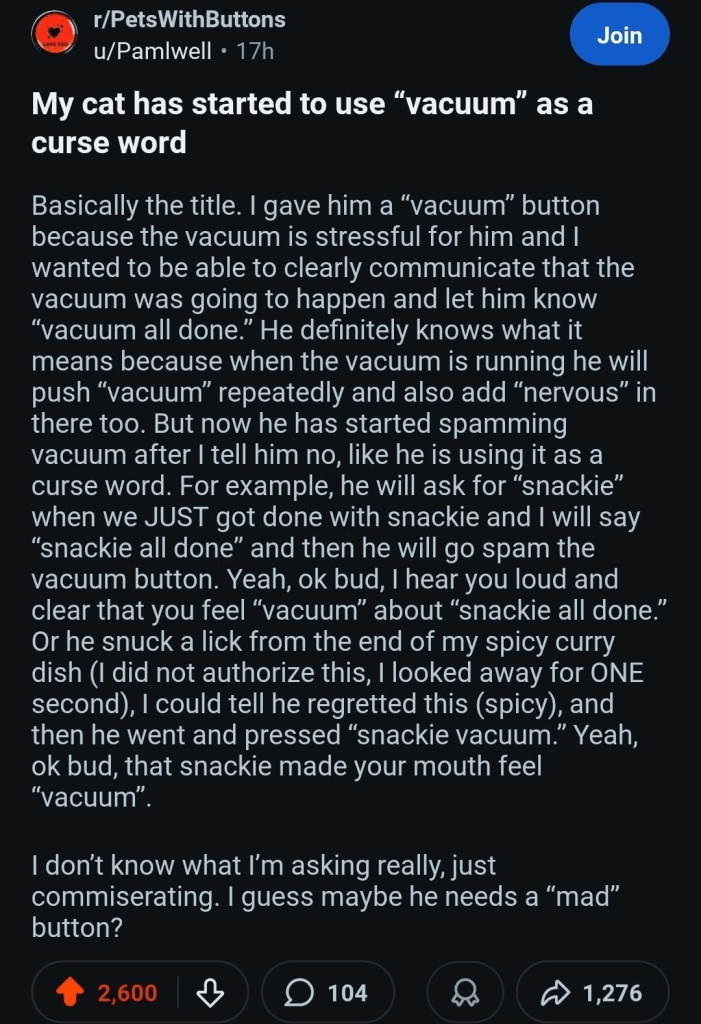
Look, I get why the official scientific jury is still out on “do animals, like, reaaally have thoughts and feelings and stuff, or is it all just mimicry and operant conditioning, maaan?” Science is all about repeatability and rigor and proof beyond unreasonable doubt and it takes a lot of work and studies and evidence to elevate a hypothesis to the level of Theory, let alone Consensus.
BUT.
There are tons of people who don’t give a crap about scientific rigor, as well as scientists just voicing personal opinion, who are still on the fence even after seeing sh*t like this:
I mean, come on! You’re telling me you’ve seen all this stuff about cats swearing and bonobos making up new words and dogs saying “oops” and talking about their dreams and you’re still going “but is that, like, reaaaaly thoughts and emotions and a complex inner life”??
What in the name of Love are you waiting for? A dissertation written by a squid???
On the plus side, the scenery is gorgeous. It’s a small town right below one of the tallest mountains in the country. The weather is practically always sunny, even in winter, and there are multiple lovely parks in walking distance.
A lot of the town’s business comes from tourists, so it also has a charming and vibrant main street with an unusually high concentration of coffee shops for a town its size. Really good coffee shops–there’s one in particular that sells some of the best pastries I’ve ever had, including sumptuous homemade pop-tarts.
Every resident we’ve talked to so far has been friendly and helpful, especially the staff at our kids’ school (for whom we are extremely grateful). There’s even a surprisingly large liberal and queer presence, although the town as a whole is pretty conservative–we even had our own local Pride event!
On the minus side, well…like I said, the town is pretty conservative. The district school board, for example, has officially “decreed” that there are only two genders and that they are fixed from conception, and the town’s elections skew heavily Republican. Pickups with Trump bumper stickers are everywhere.
It’s also a very long way from my office, and while the scenery helps make the drive itself bearable, it still means too much money spent on gas and not enough time spent with my family.
The weather is also something of a double-edged sword–the thin atmosphere means the summer sun can make an 80-degree day feel like 100, while the winters alternate between frigid (often snow-packed) and weirdly warm. Deer, ice, fog, and flash floods are all potential road hazards–sometimes in the same day!
On the whole it’s a lovely place to live–at least for now–and we mostly knew what we were getting into when we moved. There have only been a handful of surprises, most of them pleasant.
By far the most unexpectedly pleasant surprise has been the local newspaper, which we find stuffed in our PO box about twice a month. It’s been strangely empowering just knowing more about what’s happening in the town, political and otherwise. It’s how we found out about the local Pride event, and how we decided who to vote for in Tuesday’s election (there were three open seats on the school board).
Even more surprising than the articles, however, have been the letters to the editor.
As I said, it’s a conservative town, so the letters to the editor contain their fair share of MAGAs, transphobes, and apologists. That being said, the discourse is mostly civil, and there have been a much broader range of views than I expected. It’s been heartening, for example, to see more than one staunch conservative condemning Trump and his actions along with the liberal and moderate voices, and there are many letters that share useful information on purely local issues (like the aforementioned school board’s activities).
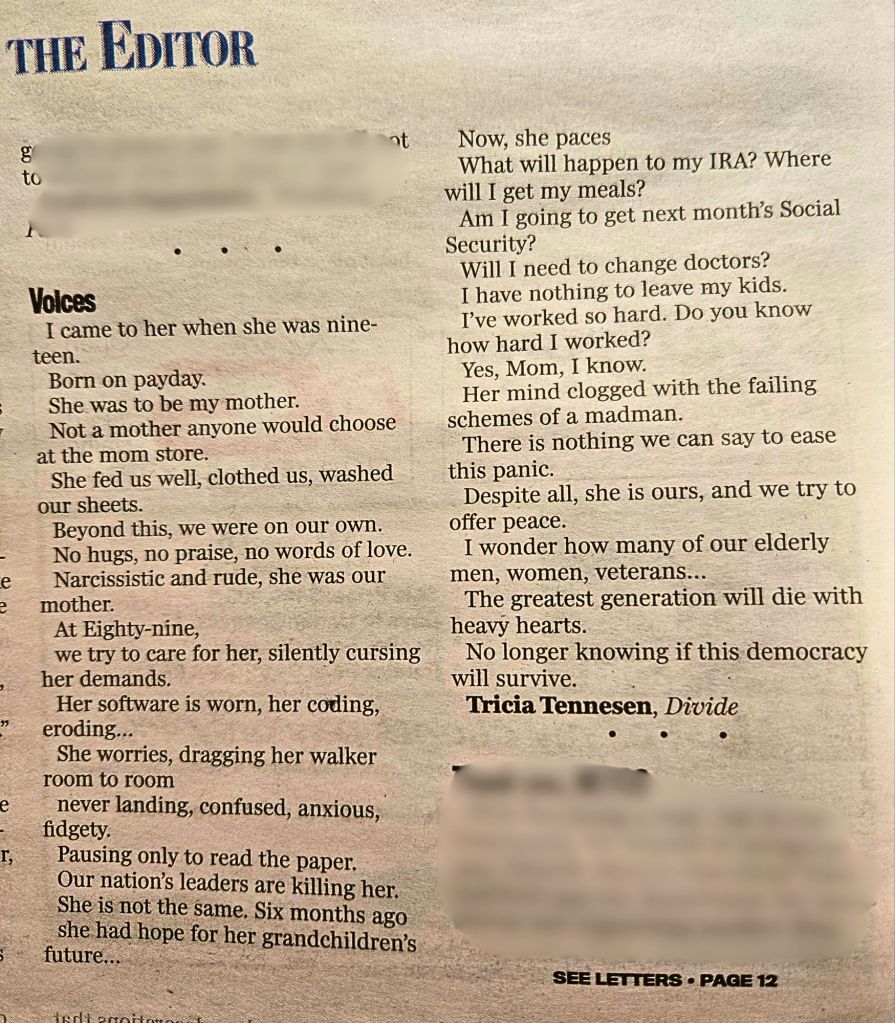
Most surprising of all, however, have been the letters that aren’t really about politics at all, the ones that are just about lived experiences. Emotions, thoughts, and memories shared honestly; not as rhetoric or argument, but as simple communication. Sometimes it’s a plain “thank you” or “congratulations,” other times it’s more complex, but in each case the feeling is of neighbors reaching out to each other through a sense of community, not competition, fear, or anger. Not the Voice of the People, just…people.
People, and their voices.
Voices
I came to her when she was nineteen. Born on payday. She was to be my mother. Not a mother anyone would choose at the mom store. She fed us well, clothed us, washed our sheets. Beyond this, we were on our own. No hugs, no praise, no words of love. Narcissistic and rude, she was our mother. At Eighty-nine, we try to care for her, silently cursing her demands. Her software is worn, her coding, eroding… She worries, dragging her walker room to room never landing, confused, anxious, fidgety. Pausing only to read the paper. Our nation’s leaders are killing her. She is not the same. Six months ago she had hope for her grandchildren’s future… Now, she paces What will happen to my IRA? Where will I get my meals? Am I going to get next month’s Social Security? Will I need to change doctors? I have nothing to leave my kids. I’ve worked so hard. Do you know how hard I worked? Yes, Mom, I know. Her mind clogged with the failing schemes of a madman. There is nothing we can say to ease this panic. Despite all, she is ours, and we try to offer peace. I wonder how many of our elderly men, women, veterans… The greatest generation will die with heavy hearts. No longer knowing if this democracy will survive.
I wrote Tuesday’s post in a bit of a rush. Looking over it, I think it suffers from a lack of concrete examples. So, here are a few instances where I’ve “revised” some of my own childhood dreams:
The first thing I wanted to be when I grew up was an inventor. This lasted until I learned that inventors don’t just come up with ideas, they have to implement them as actual prototypes (or at least know enough engineering to make some diagrams and file a patent). Eventually, I figured out that “just coming up with ideas” is much closer to the definition of an artist, which is currently what I want to be when I grow up.
A while after giving up (I thought) on being an inventor, I got really excited about marine biology. I’d always loved science and learning about nature, and I became particularly enthralled with cephalopods (cuttlefish are still one of my favorite animals). So I decided I’d become a marine biologist. A bit later I took some actual science classes and learned that the vast majority of doing science (as opposed to learning science, which I love) is essentially paperwork: taking notes, filling out spreadsheets and forms, doing calculations, and so on. All things I not only don’t like doing, but am also bad at. Nowadays I only do original science for fun, when I want to, and I’m content to leave the rest of it to those with the obsession to spare.
Sometime in high school, I decided I wanted to learn how to play the piano. I really enjoyed it and ended up playing almost every chance I could get. I thought maybe I could turn it into a career, so I did some investigating–including interviewing a couple of actual professional pianists–and eventually came to the conclusion that while I wanted to keep learning and practicing, I didn’t want to devote all my free time to it. It would be a hobby, or a skill I could use in other ways (composing, for example), but not a career.
Ever since I was a toddler playing with dolls, I’ve wanted to be a father when I grew up. I knew before I started that having a family would be more work than I expected. But even after adjusting for that fact, starting a family was still more work than I expected. It’s extremely difficult to maintain any ambitions of your own when you’re raising kids. (Fortunately, it’s still worth it.)
I’ve had a lot of ideas for videogames and stories over the years, and I’ve finished almost none of them. Partly, this is because I’ve only begun to address some of the mental health, organizational, and motivational issues that have prevented me from finishing big projects in general (see below). However, another part of it is that many of those ideas…well…sucked. As I’ve said before, making garbage is an essential part of improving–but paradoxically, it only works if you’re trying not to make garbage. Making things you know in advance will suck doesn’t help you improve!
I’ve previously hinted that I have ADHD. I wasn’t diagnosed until just a few years ago, and I didn’t get a therapist until this year, so I’ve only recently begun to seriously address challenges I’ve been stymied by my entire life. Dealing with mental health issues, just like taking care of your physical health, doesn’t sound ambitious or glamorous (probably because it’s something you’re expected to do, and thus considered “normal”). But obviously, not everyone takes good care of their physical health, and due to stigma and lack of support from our healthcare system the situation is even worse for mental health. And as for chronic conditions? You know, health problems that aren’t considered normal? Addressing those is treated like “catch-up”–like doing extra homework because you were sick and missed a week of school. Commendable, perhaps, but in the best case it only puts you “back to normal.” In reality, taking care of your mental and physical health is a serious, ongoing challenge, even when nothing is “wrong” with you, and your mental and physical health have ripple effects across literally everything else in your life. Staying healthy is a worthy ambition!
…I could keep going, but I think you get the idea.
What are some of the childhood dreams you’ve “revised?” Are there any you thought you’d given up on that you’re now seeing in a different light?
I often imagine what my younger self would think of me now. There are some things he’d undoubtedly be happy about: I’m a father now, just like I always wanted to be; I married my high school crush; I’m living in a house with wheels; etc.
On the other hand… If he asked, of all the video games and stories he wanted to make, which ones I’ve finished–or the places I’ve traveled and languages I’ve learned–or what my career has been like–well, just imagining his crestfallen face is enough to make me cringe.
I’ve always had big dreams–sometimes too big; the gap between fantasy and reality is often much wider than I expect it to be. So the thought that I’ve failed to live up to my dreams–that my past self would say I’ve given up on them–well, it’s discouraging. Are we all just doomed to lose our childlike ambitions as we age? It can certainly feel that way.
I don’t think that’s quite right, though. When I reflect on it, I haven’t actually given up on many of my most ambitious dreams, I’ve just–put them aside for now. And there are other things I’m working on, or have already accomplished, that don’t sound as impressive as the things I imagined doing as a child, but which are at least as ambitious. Perhaps part of the reason it seems like we become less ambitious as we age, is simply that we get a better idea of the difference between things that sound impressive and difficult, and things that are actually valuable.
It’s important to remember that revising your dreams is not the same as giving up on them. Do you still have dreams? Then you haven’t given up! Sometimes, our priorities change as we get older, or we learn more about the difference between what we think we want and what we truly value. Indeed, it would be strange if our dreams didn’t change as we aged–it would mean we hadn’t learned anything new about ourselves or the world since we were children!
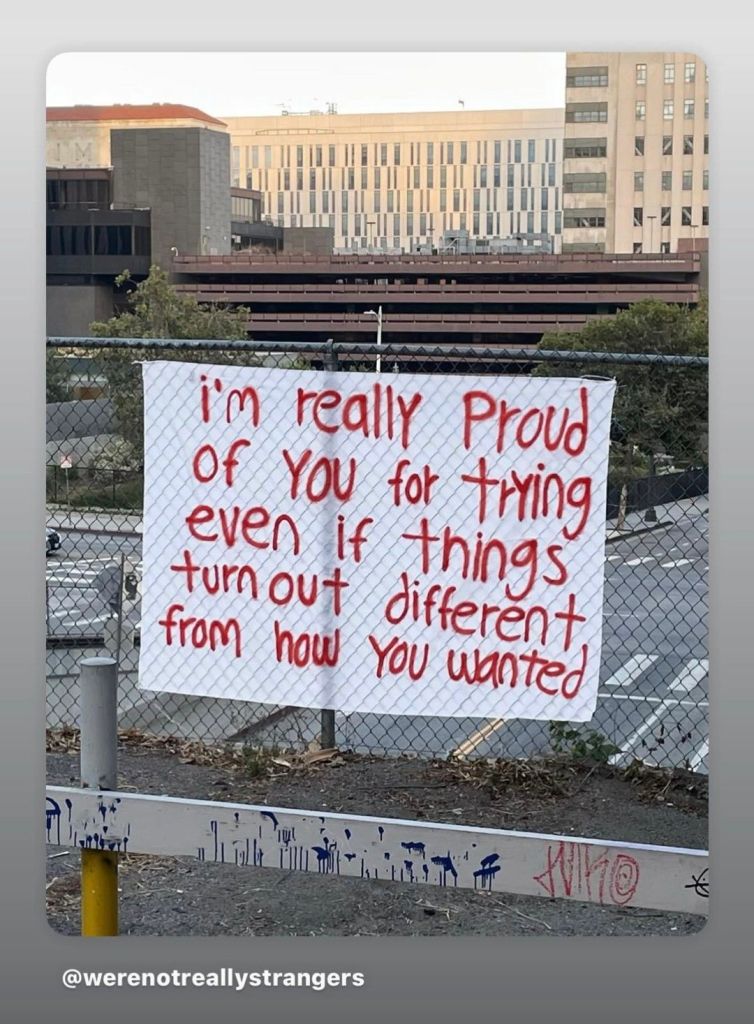
So it’s okay to let go of some of your past ambitions, just as it’s okay to delete an awkward paragraph from an essay. The important thing–in art and in life–is to keep trying.
(P.S. I’ve written a follow-up with some more concrete examples.)


 In Search of Secrets