
What? You thought I was done? HA!
Filed under Microblogging
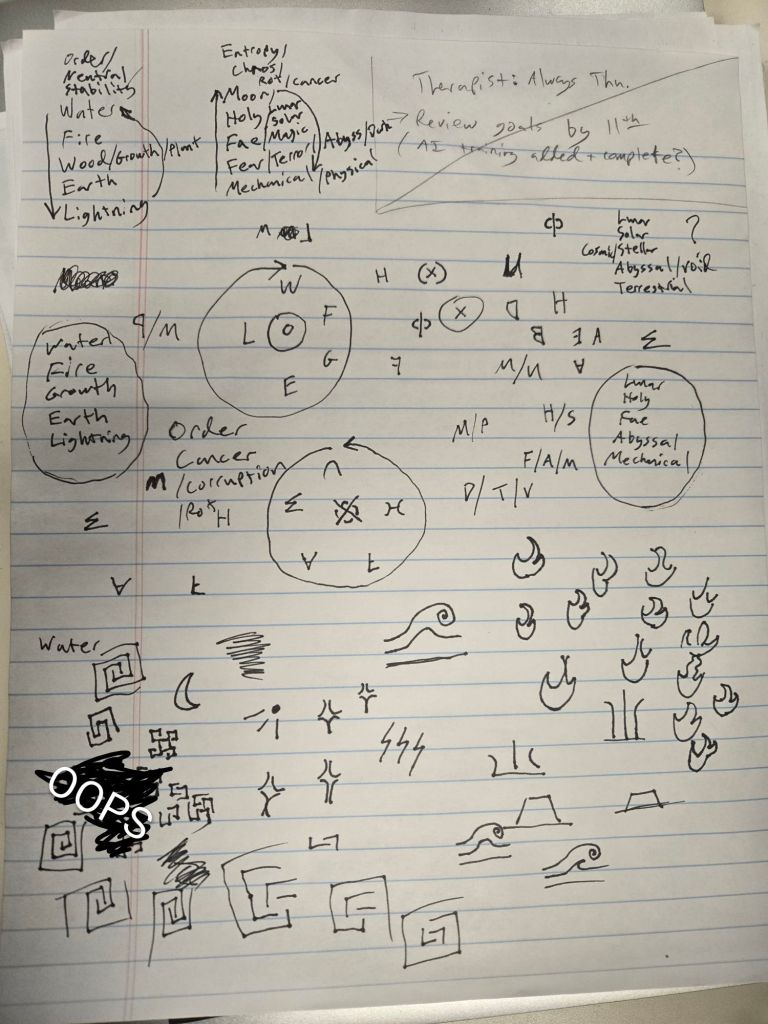
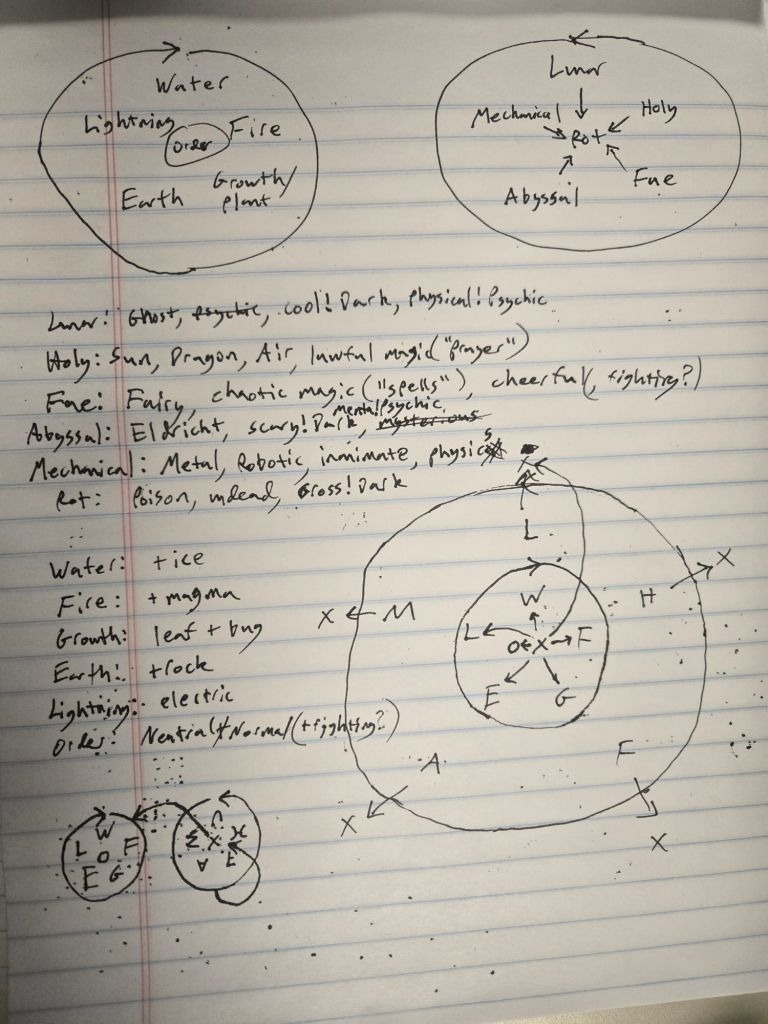
Me: The Palworld type system needs fixing.1
Nobody:

Filed under Microblogging, Reviews
Filed under Microblogging, Reviews
This post is part of a series examining the relationship between videogames and the tragic form–today’s topic is the classic atmospheric epic Shadow of the Colossus.
Unmarked SPOILERS for Shadow of the Colossus follow–as before, if you haven’t played it yet I recommend you do so before reading this post. Continue reading
Filed under Essays
This post is part of a series examining the relationship between videogames and the tragic form–today’s topic is the action-RPG Bastion by Supergiant Games.
MAJOR SPOILERS for Bastion follow–as before, if you haven’t played it yet I recommend you do so before reading this post. Continue reading
Filed under Essays
This post is the first in a series examining the relationship between videogames and the tragic form–today’s topic is Terry Cavanagh’s excellent action-platformer Don’t Look Back.
MAJOR SPOILERS for Don’t Look Back follow–if you haven’t played it before, I recommend you do so before reading this post. Continue reading
Filed under Essays
This post is the introduction to a series examining the relationship between videogames and the tragic form.
The tragic genre, along with comedy, is one of the oldest in Western literature. Classically speaking, a tragedy is more than just a sad ending–it’s a particular kind of story meant to inspire particular kinds of emotions in the audience. A story where the protagonist is miserable from start to finish, with no pretensions to changing their fate, isn’t really a tragedy–it’s just depressing. Similarly, a story that ends in tragedy due to circumstances beyond the protagonist’s control isn’t really tragic, either–that’s just a disaster. True tragedy, as argued most famously by Aristotle, requires that the protagonist bring the ending upon themselves through some crucial mistake or flaw. The tragic ending is a direct result of the protagonist’s own actions, which the audience can only sit helplessly and watch–yet this introduces a big problem for the medium of videogames, in which the audience is the protagonist. The mistake or flaw derives its power from the excruciating if only it leaves in the mind of the audience. If only Hamlet had killed Claudius when he had the chance! If only Oedipus had known his true lineage! If only Eve hadn’t listened to that stupid snake! Yet when the audience is the protagonist, what’s to stop them from avoiding the mistake altogether? How can we reconcile a genre that pre-destines the hero’s downfall with a medium in which the audience influences their every decision? How can we successfully weave together the agency of games with the inevitability of tragedy?
In the following posts, I’ll be taking a look at some games that attempt to do this, analyzing and discussing the various techniques they employ. Over the course of this series, I hope to show that videogames are no more or less suited to the tragic form than any other medium–they simply require different strategies than most narratives employ.
Filed under Essays

 In Search of Secrets